
Environmental Impact Assessment
The consortium submitted an Environmental Impact Assessment (EIA) Scoping Report to Blaby District Council (BDC) in June 2025.
The EIA scoping report seeks to agree the environmental topics – such as landscape and visual impact, air quality, noise and vibration – to be assessed within the Environmental Statement that will be submitted as part of any future planning application.
At this stage, all project details remain indicative as technical assessments continue. The submitted EIA scoping report will help shape how these proposals will be assessed to ensure responsible and sustainable development. The report is available in full on Blaby District Council’s website, and ongoing surveys and studies will continue to inform the evolving plans.
-
The scoping request is the first step of the EIA process and is generally submitted in advance of a major planning application.
An EIA scoping request is sometimes referred to as a scoping report.
The objective of the Scoping process is to agree which environmental factors (e.g. landscape and visual amenity, heritage, noise, air quality) should be investigated within the Environmental Statement (ES) that will be submitted with the planning application.
-
For any development, it is important to identify the range of possible impacts and ensure these are minimised. To do this, the consortium has commissioned an Environmental Impact Assessment (EIA) as part of the formal planning application process.
EIA involves a range of investigations to determine the ‘likely significant effects’ of the project. It considers a wide range of different potential environmental impacts. This considers what topics and effects have the potential to be ‘likely significant’ and therefore should be assessed in the Environmental Statement (ES) which is submitted as part of the planning application.
-
The EIA report will be available to view in full on Blaby District Council’s website.
-
Statutory consultees and relevant bodies will review the details of the report and respond to the council.
The Council will consider the EIA scoping report and comments they receive from statutory consultees (organisations they must consult with). Based upon this the Council will produce an EIA ‘Scoping Opinion’ identifying what they agree is proposed for assessment in the Environmental Statement (ES) and any changes to the proposed scope of assessment that may be required.
-
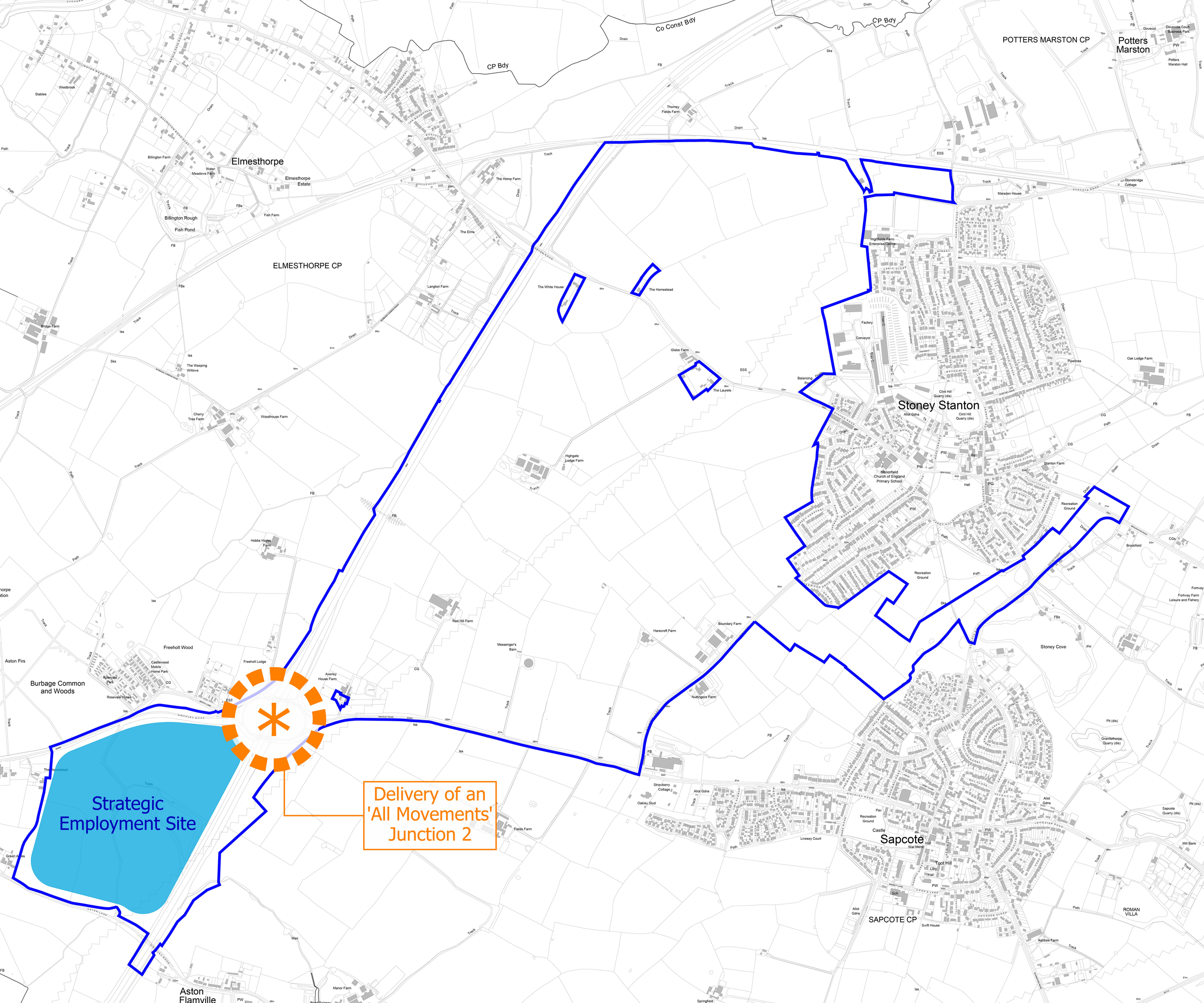
No. EIA scoping can extend beyond the physical site boundary to encompass wider areas where significant environmental impacts are likely. This is crucial for understanding the full scope of potential effects, including both direct and indirect impacts.